3D and 4D Trans-Esophageal Echo Training
- Description
- Curriculum
- Reviews
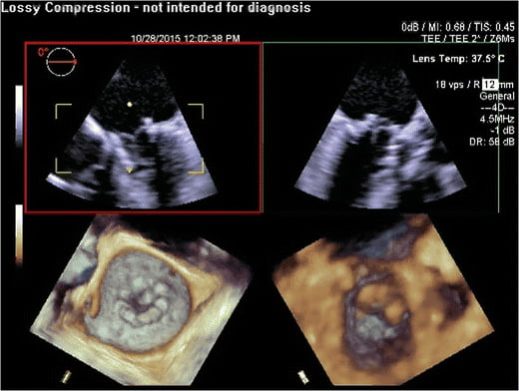
- Led by expert instructors with extensive experience in echocardiography, the training program combines theoretical learning with hands-on practical sessions to ensure a thorough understanding of TEE principles and applications. Participants delve into topics such as probe manipulation, image acquisition, data processing, and interpretation techniques specific to 3D and 4D TEE.
- The curriculum encompasses a wide range of cardiac pathologies and clinical scenarios, enabling participants to develop proficiency in assessing cardiac anatomy, function, and hemodynamics using advanced imaging modalities. Through interactive lectures, case studies, and workshops, participants learn to navigate TEE equipment and software, optimize image quality, and accurately interpret findings to guide clinical decision-making.
- Hands-on training sessions provide participants with invaluable experience in performing TEE examinations under the guidance of experienced mentors. Through simulated scenarios and real-life case studies, participants refine their skills in probe manipulation, image acquisition, and interpretation, gaining confidence in their ability to effectively utilize 3D and 4D TEE in clinical practice.
- Collaborative learning is fostered through group discussions, peer review sessions, and interactive seminars, allowing participants to exchange insights, share best practices, and address challenging clinical scenarios collectively. Additionally, participants have access to cutting-edge technology and state-of-the-art simulation tools to enhance their learning experience and proficiency in 3D and 4D TEE.
- Upon completion of the training program, participants emerge with a heightened level of expertise in 3D and 4D trans-esophageal echocardiography, prepared to integrate advanced imaging techniques into their clinical practice effectively. Whether pursuing a career in cardiology, cardiac imaging, or echocardiography, graduates of the program are equipped to make meaningful contributions to patient care through the application of cutting-edge echocardiographic technologies.
- Cardiology, cardiovascular
- Cardiologist
- Anesthesia, cardiac anesthesia
- Cardiac surgeon, cardiothoracic surgeon
- Cardiac surgery, cardiothoracic surgery, thoracic surgery
Period of the course :
Until the candidate acquire the required skills.
-
1Lecture 1Text lesson
Clinically applied physics of 4D echo.
1. duty factor,
2. Quality factor ,
3. single crystal technology,
4. harmonic imaging, phassed array,
5. microautarization, analouge to digital-digital to analouge converter
6. interference , summation&delays.
Volume rate aspects and limitations “Temporal resolution”
-
2Lecture 2Text lesson
Integrated approach to correlate the cardiac anatomy to the advanced image orientation protocols and the various 4D TEE views. *4D Mid TEE 4 & 5 chamber views *4D Mid TEE commissural view *4D Aortic valve long & short axis views *4D bicaval view *3D Zoom IAS and mitral valve surgeon view.
-
3Lecture 3Text lesson
*Critical decisions in TEE: supplementary data to be fulfilled in cases of mitral stenosis, mitral regurge, aortic pathology, ASD and VSD. Clinical judgment on an intra cardiac mass normal Vs abnormal.
-
4Lecture 4Text lesson
Understanding the “Rendering methods”: surface rendering/ volume rendering using real analogue anatomical models
-
5Lecture 5Text lesson
Hands ON.
-
6Lecture 7Text lesson
Critical decisions in TEE: supplementary data to be fulfilled in cases of mitral stenosis, mitral regurge, aortic pathology, ASD and VSD. Clinical judgment on an intra cardiac mass normal Vs abnormal.
-
7Lecture 8Text lesson
What does the surgeon need?. Intra-operative case scenarios simulation. *Lecture eight to ten: Hands On
Working hours
| Monday | 09:00 - 17:00 am |
| Tuesday | 09:00 - 17:00 |
| Wednesday | 09:00 - 17:00 |
| Thursday | Closed |
| Friday | Closed |
| Saturday | 09:00 - 17:00 |
| Sunday | 09:00 - 17:00 |